• jungle monarch - multi generic orchid - orchids

    Orchideen-Ersatz

    An meinem Geburtstag hatte ich bei Ikea ein Oncidium Sweet Sugar gefunden, was sich allerdings als vorgeschädigt herausstellte und schnell einging. Gestern war ich auch bei Ikea und habe zwar keine Übertöpfe gefunden, aber ein Orchideen-Schnäppchen. Ja, ich weiß, eigentlich wollte ich um die Schnäppchen ja einen Bogen machen, weil die meist nur Arbeit und Mühe kosten und dann doch eingehen. Aber hier hab ich definitiv Glück gehabt. Und nun habe ich einen würdigen Ersatz für die andere Pflanze:
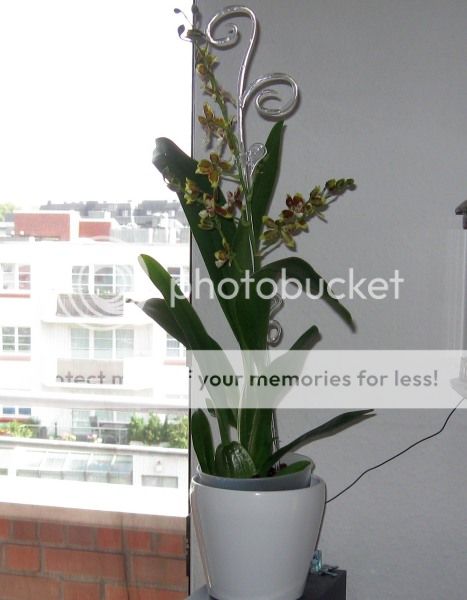
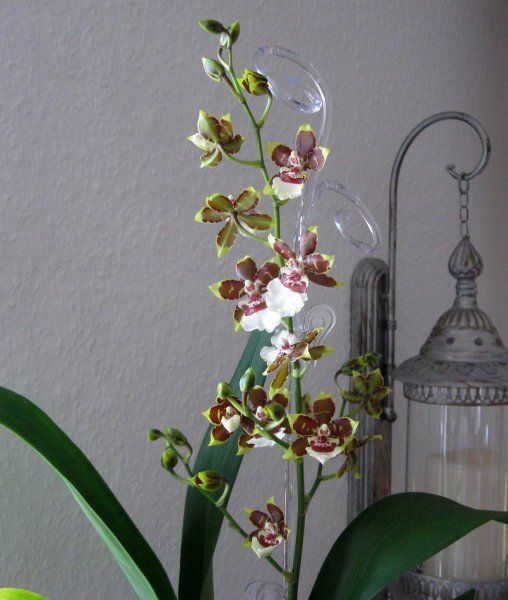
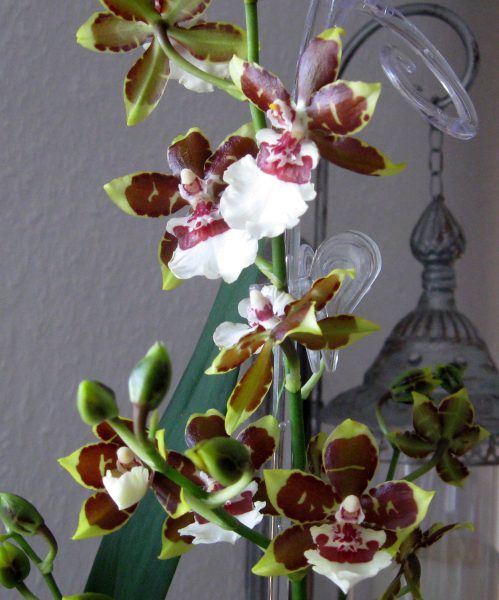
    Odontocidium/Colmanara Jungle Monarch (Miltonia X Odontoglossum X Oncidium) (nach Umordnung der Elternpflanzen in andere Gattungen auch Onc. Debutante X Onc. maculatum)
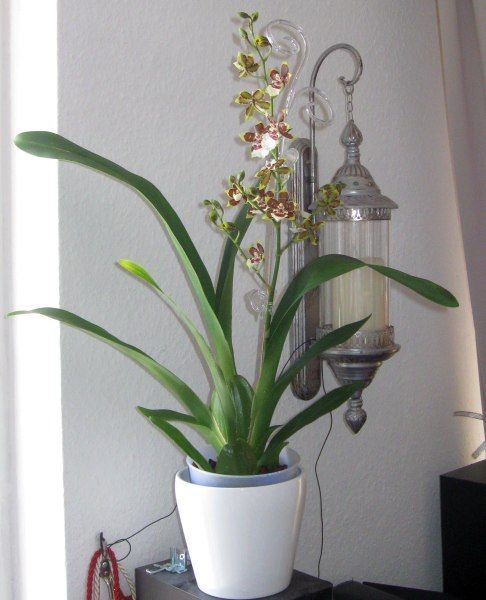
    Jungle Monarch

    Jungle Monarch

    Jungle Monarch

    Jungle Monarch
    Die Blüten riechen übrigens! Heute Morgen (ehm, Mittag) haben sie gerochen, ich weiß den Duft nur nicht einzuordnen. Muss morgen nochmal schnuppern.

    Warum Glück? Weil die Orchidee in einem super Zustand ist- man beachte die Wurzelmenge:
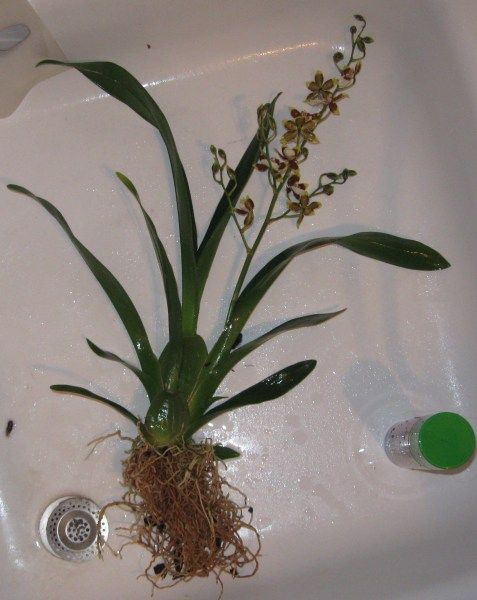
    Jungle Monarch

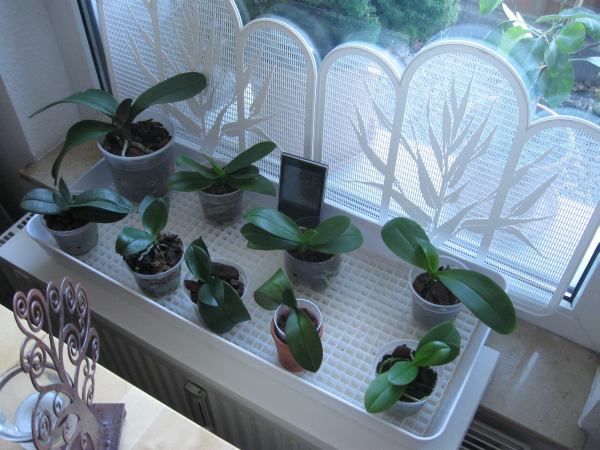
    Nach einer kurzen Quarantäne wird die Pflanze in dem Blumenkasten in der Küche wohnen, zusammen mit der Pflanze mit den roten Knospen. Miss Milton wird in ein großes Glas umziehen und daneben stehen.

    Orchid-Replacement:
    On my birthday, I had found an Oncidium Sweet Sugar at IKEA, but unfortunately that plant did already have some damages in the root area and didn’t make it.
    Yesterday I was at IKEA again and found a worthy replacement by chance. And cheap, too. (I know, I have promised myself to stay faaaar away from cheap little plants, because they normally just cost a lot of time and effort and die anyway, but here it was obviously a healthy plant. Irresistible.)
    It’s a Odontocidium/Colmanara Jungle Monarch (Miltonia X Odontoglossum X Oncidium)
    I found additional info here: http://davesgarden.com/guides/pf/go/97937/ I quote said page: „It was once classified as Colmanara Jungle Monarch but with recent name changes, the Miltonia warscewiczii parent is now Oncidium fuscatum, hence this hybrid was renamed as an Odontocidium from Colmanara.“
    But whatever the name, I love the colourful blossoms and they are even somewhat fragrant around morning / midday, I just couldn’t place the smell, yet.
    The last picture illustrates how lucky I was- all those roots there are ok, nothing hollow or murky. Now I hope it will feel at home quickly here.
    After a short quarantine, it is going to live in the flowerbox in the kitchen with the plant featured in the post below. Miss Milton is going to move into a high Vase and can live next to them.
  • multi generic orchid - orchids

    Immer noch warten

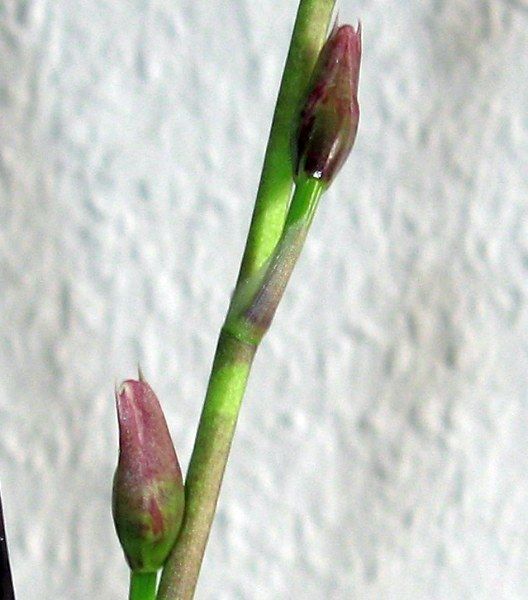
    Die Knospen wachsen langsam aber stetig, jetzt sieht man wieder ein bißchen mehr. Und es sind sogar sieben Knospen! ♥
    The buds grow slow but steadily and now new details become visible on them. And they are even seven, not six as I thought first. ♥
    Multihybride

  • Layout - orchids - phalaenopsis bellina

    Alles neu *g*

    Das Layout von meinem Blog hier ist neu.
    Ich habe mir das Theme Weaver II mal genauer angeschaut und festgestellt, das ich Monate brauchen würde bis ich alles mal ausprobiert hätte- perfekt flexibel für meine Seite, würde ich sagen. Deshalb habe ich mich nun erstmal darin eingerichtet. Mein Plan ist, ein paar Jahreszeiten-Layouts zu basteln, zwischen denen ich dann wechseln kann. Mal sehen wann ich das schaffe. Vielleicht sollte ich mit Winter/Weihnachten anfangen.
    Bei diesem Umzug des Themas musste ich mich zwangsweise mal wieder grafisch betätigen und habe dabei Funktionen an meinen alten Programmen gefunden, die ich sonst noch nie genutzt habe- schon lustig was man so findet wenn man weiß wonach man sucht.
    Welche Programme ich benutze? Paint. NET, Gimp, PhotoImpact 6 (ja, das läuft noch so gerade auf Win7 32 Bit) und ganz selten Corel Photopaint.
    (Natürlich wär Photoshop auch toll, aber das liebe Geld… (Ich glaube nämlich nicht, das die PS Elements Version für das was ich so mache ausreicht.)
    So lernt man eben kreativ sein- die oben genannten Programme können zusammen prinzipiell das Gleiche wie PS- man muss sie nur dazu bringen. *g* )

    Noch mehr neu- ja neue Blätter! Meine Orchideen haben die Spinnmilben allesamt recht gut überlebt und sind jetzt voll im Wachstumsmodus:
    Orchideen

    Phalaenopsis bellina blüht als Einzige noch. Das hier ist die zweite Blüte diesen Jahres, aber es sieht so aus als wäre noch eine Knospe in Arbeit:
    Phal. bellina

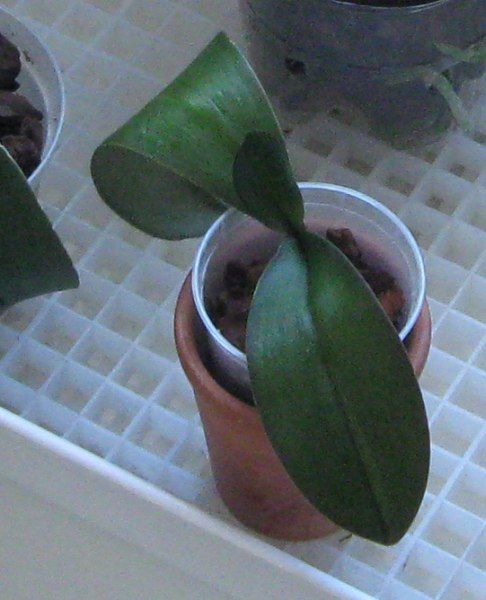
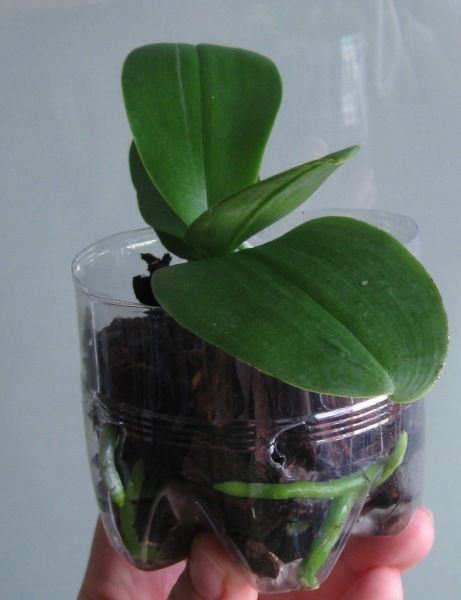
    Und neu wieder im Topf- meine kleine gelbe Orchidee mit Zitronenduft.
    Phal. Hybrid
    Sie hatte ja noch eine Wurzel und die neu wachsenden Würzelchen sahen prima aus, deshalb ist die Pflanze nun von der Tüte in den Minitopf gezogen und macht das bisher prima.

    Everything new *g*
    The layout of this blog is new.
    I took a closer look at the Theme Weaver II and was overwhelmed by the included possiblities – it would take me months to try everything, so this looked pretty good for my pages here. Which is why I spontaneously installed it and made myself at home. The plan is to make several seasonal themes which I can switch around as needed, then. We’ll see how long *that* will take me. Maybe I should start with a winter/ christmas theme…
    While moving from one theme to the next, I had to work with my graphic tools and programs because there was a background needed and and… *g* and while I did so, I discovered several functions on those good old programms that I never saw before, LOL!! Very funny how much you can find when you know what you are looking for.
    Which programs do I use? Paint.NET, Gimp, PhotoImpact 6 (yes, this does run on Win 7 bit- a bit grumpily, but it does) and rather seldomly Corel PhotoPaint.
    (Of course, having Photoshop would be real nice, too, but not for my wallet. (There is PS Elements, but I think that this version is missing most of the effects that I would be using…)But no real reason to complain, really, as the mentioned programs above do basically almost everything that PS does, too, one just has to find the right buttons and get occasionally creative. *g*)

    More new things – yes, new leaves! My orchids have all survived the spider mites more or less unruffled and have only finished blooming rather quickly to get into growth mode instead and are now showing lots of new leaves.
    The only one blooming on unerringly is Phal. bellina, with her second blossom of this year and another is in the making.

    And newly back to a pot is my small yellow hybrid that smells just as nice as Phal. bellina when blooming. It had one root left and the new ones are growing so eagerly that I moved it from the plastic bag into a mini-pot and so far it is doing very well.

  • multi generic orchid - orchids

    Warten auf Blüten

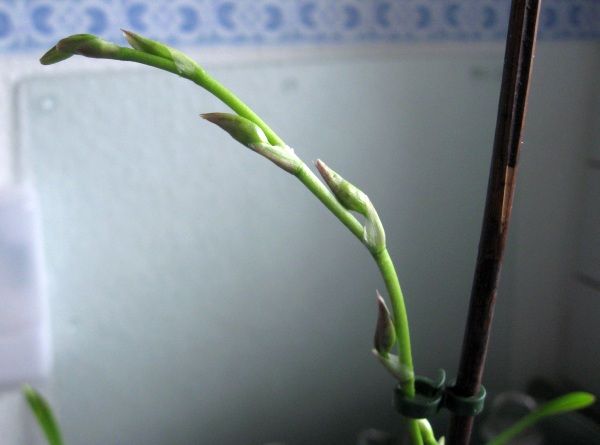
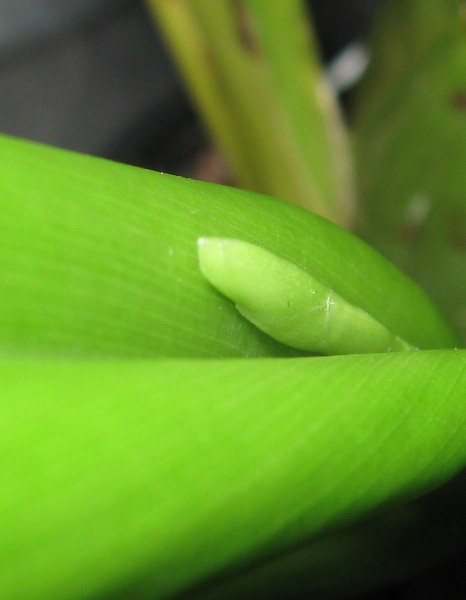
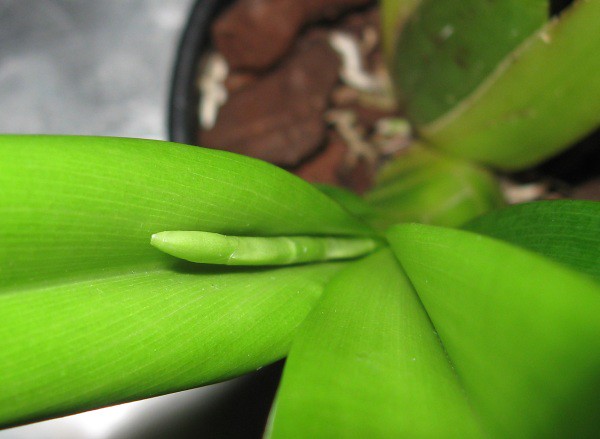
    Die Pflanze die ich im Januar bei Penny gerettet habe, bastelt weiter fleissig an ihrem Blütentrieb. Jetzt kann man schon die einzelnen Knospen erkennen und es werden sechs Blüten, eine mehr als im Januar. *freu*
    Blütentrieb Multihybride

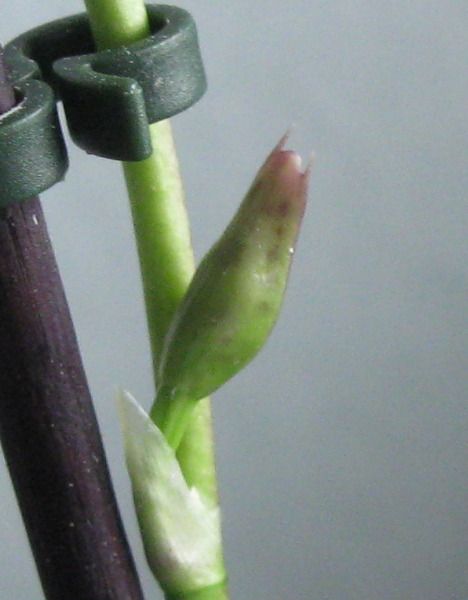
    Hier sieht man sogar schon die Andeutung des Musters in der Hülle der Knospe:
    Knospe Multihybride

    The plant that was saved this January from the supermarktet is still busy with its new spike. On the second image you can already glimpse a hint of the pattern through the little „cover“ on the bud. And there are going to be six blossoms, that’s one more than in January! Squee!

  • orchids - phalaenopsis - spider mites

    Wachstum überall

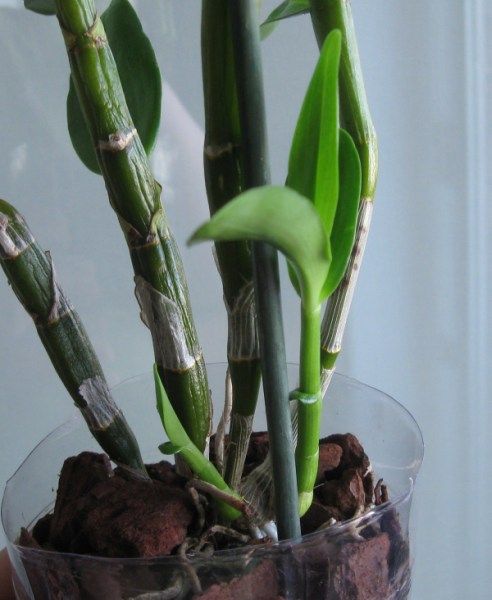
    Die Neutriebe der Dendro Nobile Hybride wachsen wie verrückt, als ich die Pflanze bekam, konnte man nur den größeren als kleines grünes Etwas erahnen.
    The new shoots of the Dendro Noblie hybrid grow like heck- when I got the plant, one could only see a hint of green of the bigger one.
    dendro nobile hybrid

    Phalaenopsis bellina bastelt fleissig an der zweiten Knospe und der alte Blütentrieb darüber zeigt nun wieder Wachstum.
    Phalaenopsis bellina is busily working on the second bud and the old spike above is beginning to show growth activity again.
    phal bellina

    Die von den Spinnmilben betroffenen Pflanzen scheinen sich gut erholt zu haben, sie sehen jedenfalls ziemlich gesund aus. Hier mal stellvertretend ein paar.
    Those plants affected by the spider mites seem to have recovered from this very well, as they look pretty healthy, as you can see on the following examples.
    fragrant phal hybrid

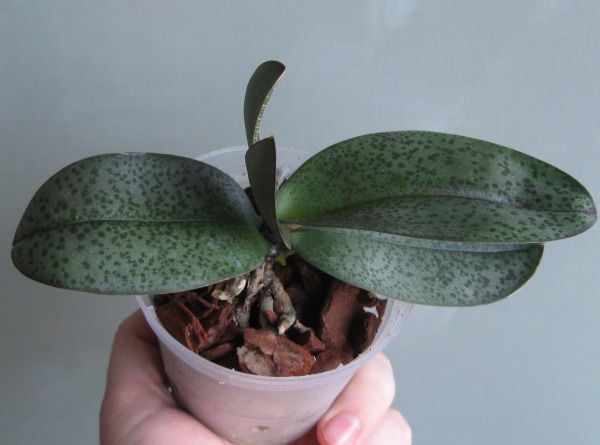
    So sieht so ein Schaden übrigens an einer Pflanze mit dunklem Laub aus:
    Here you see what the mite damage looks like on a dark and strongly pigmented leaf:
    damage by spider mites

    Diese hier ließ anfangs ganz schön die Blätter hängen, aber hat sich nun super erholt- und wie man sieht war das Wurzel-Wachstum nie betroffen. *g*
    This one was pretty droopy when treatment started, but also recovered well- and the growth of the roots was never affected.
    dtps. black jack

  • orchids - phalaenopsis - rootless - sick plant

    Lebenszeichen

    Meine beiden wurzellosen Phalaenopsis wollen beide noch leben und zeigen das mehr oder weninger deutlich. 🙂
    Diese hier ist sehr eigenwillig, sie macht erstmal ein neues Blatt, den Ansatz dazu bemerkte ich vor ca. einem Monat, da sah es so aus:
    Tuetenphal

    Und so heute- von Wurzeln noch immer keine Spur, aber das Blatt wächst kräftig:
    Tuetenphal

    Die Andere hat etwas länger gebraucht, dafür ist sie aber „standardkonform“ *g* und macht ein neues Blatt und neue Wurzeln.
    Tuetenphal

    Tuetenphal

    Beide werden jeweils in einer durchsichtigen Plastiktüte gehalten, in die ich vorher einen Sprühstoß Wasser aus der Blumenspritze gebe. Die Tüte wird dann mit einer Klemme verschlossen. Alle zwei Tage kommen die Pflanzen für eine Nacht aus der Tüte, einmal im Monat sprühe ich Wasser mit Dünger unter die Blätter und lasse die Pflanzen ohne Tüte abtrocknen. Die Tüten-Phals stehen hell, bei Zimmertemperatur, aber sie bekommen keine Sonne ab. Ich achte darauf, dass die Pflanzen in der Tüte auf der Seite liegen- so kann herabtropfendes Wasser nicht im Herz der Pflanze stehenbleiben.

    English Summary:
    Above you see my two rootless Phalaenopsis and the current state they are in after continuous intensive care. The first plant is a bit perculiar as it makes such a nice new leaf but shows no intent of growing the sorely needed new roots. Plant two luckily behaves as expected and there are new roots in the making and as a nice extra, also a new leaf. I am very happy to see their efforts.
    Both are kept in a transparent plastic bag, each. Before the plants are set into the bags, I spray a little water in there, then close the bag tight with the help of a clip. Every two days the plants get to spend an entire night outside their bags to get the chance to dry (and to avoid mould). The bags sit in the window so they get a lot of light, but they are protected from direct sunlight. Once a month, I spray water with fertilizer in it onto the undersides of the leaves and let the plants dry after that before returning them to their moist bags. When in the bag, I take care that the plants lie on their sides, because like this, no dripping water can end up in the heart of the plant and cause rot.

  • orchids

    „Miss Milton“ nimmt den Schleier

    …nee bei mir geht keine Orchidee ins Kloster. *g*
    Stattdessen hatte ich die glorreiche Idee meine mimosenhafte Miltoniopsis einfach vor die Tür zusetzen – denn da ist es kühl und es gibt einen Tag-Nacht-Unterschied. Wenn hier die nächste Hitzeperiode anfängt nehme ich sie vorübergehend wieder rein, denn ich denke bei 30C oder mehr fällt sie tot um. Aber bis dahin ist es draußen sicher netter für sie.
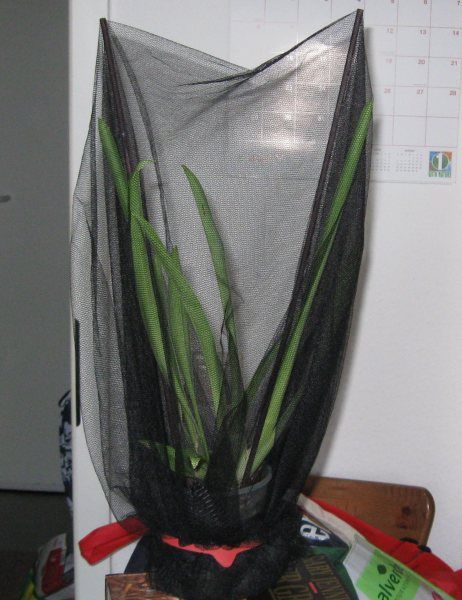
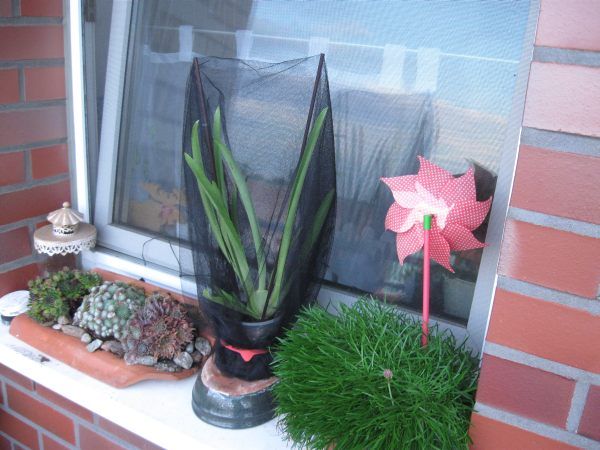
    Das Netz soll übrigens keine Viecher abwehren (ist ja eh behandelt und potentiell tödlich für alles was krabbelt), sondern der Morgensonne etwas die Kraft nehmen. Ansonsten ist der Standort ja unverändert, nur auf der anderen Seite des Fensters.*g*
    Miss Milton und der Schleier
    Miss Milton draußen

    „Miss Milton“ takes the veil.
    Naw, no orchid heading for the monastry here, LOL!! I just got the idea to simply put out my obviously suffering Miltoniopsis, because it is cool out there and there is a true change between day and night- probably she needs that to recover. As soon as we fall prey to the next heat-period, I will take her back in, though, because no way that plant lasts more than 30C. But until then she might like it better outdoors.
    The „veil“ is not for fending off creepy crawlies, but for lessening the power of the morning sun, so that the plant will hopefully stand this. Apart from that, the spot the plant is in has not changed vastly- it is just on the other side of the window now.

  • blossom - orchids - phalaenopsis

    Orchideen-Blüten

    Beinahe ein Jahr nach ihrem Einzug blühen zwei meiner allerersten Orchideen wieder.
    Zuerst ein paar Stimmungsbilder- Morgenstimmung im Orchideenfenster:
    Dtps. Sogo Gotris

    Phal. Mashimo

    Doritaenopsis Gotris SOGO F-1917
    Dtps. Sogo Gotris

    Phalaenopsis Mashimo
    Phal. Mashimo

    Phal. Mashimo

    Almost one year after getting into the orchid-hobby, two of my first plants bloom again. They are Doritaenopsis Gotris SOGO F-1917 and Phalaenopsis Mashimo. Above you find two mood-pictures with impressions of a warm and sunny morning in the orchid-window. And below the brandnew flowers.

  • orchids - phalaenopsis - Phalaenopsis Zoro Amato

    Orchideen-News

    Teilweise blüht schon was-
    Phal. Zoro Amato

    Und die anderen basteln fleissig an neuen Trieben und Knospen.
    Die größte Überraschung war die hier- eine von meinen Mini Marks, die nach einem durchblühten Winter ziemlich in den Seilen hingen. Anscheined gefällt ihnen die Anreicherung des Substrats mit Moos, sie waren ja schon immer eher durstige Pflanzen. Jetzt macht eine ein neues Blatt und die andere:
    Phal. Mini Mark

    Phal. Mini Mark

    Und hier noch meine beiden Prachtstücke, die sich nun anscheinend gut eingewöhnt haben, da sie prima wachsen.
    Die Kleine:
    Dtps. Sogo Gotris

    Und die Große:
    Phal. Mashimo
    (Sobald der Blütentrieb nicht mehr wächst, mache ich ihn mit Klemmen fest, aber so beschädigen die den noch recht weichen Stiel)

    Orchid-News:
    Some are already in bloom as shown above.
    Others work busily on new spikes and buds. The biggest surprise was one of my Mini Marks, though. After those had bloomed on stubbornly all winter through, they were kinda spent toward the February. I gave them a wellness-treatment by adding some Spaghnum moss to their substrate (because they are pretty thirsty – don’t do that with plants that prefer it more on the dry side!) and apparently they like it well. One of them makes a new leaf and the other the spike pictured above.
    And on the last two pictures my best growing orchids, who keep going unerringly and grow apart from leaves and roots now also a spike each.
    (The spike of the Phal. Mashimo (the larger one) will be fixed to the rod with something less obvious once it has finished growing. Currently it is so tender still, though, that anything harder than the cushioned wire used here would leave dents and scratches.)

  • orchids - Ornithophora radicans

    Hoffnung auf nochmehr kleine Blüten

    Meine schmollende Ornithophora radicans ist anscheinend nicht ganz so kreuzunglücklich wie ich dachte, denn heute habe ich mehrere kleine Blütentriebe entdeckt, hurra! 😀
    Da diese wirklich winzig sind, war es ganz schön schwer diese einigermaßen scharf zustellen:
    Ornithophora radicans Blütentriebe

    Ornithophora radicans Blütentriebe

    My sulking Ornithophora radicans does not seem to be as cross with me as I thought, because today I found serveral tiny little spikes on it, whee! 😀
    They are really really tiny, so I got only mediocre pictures. When they flower, I will use a tripod for sharper images, I think.

  • ludisia - orchids

    Ludisia-Update

    Heute habe ich meine Ludisia in eine Pflanzschale umgesetzt, sieht jetzt fast etwas nach Bonsai aus.*g*
    Die Schale hat unten eine dicke Schicht Blähton-Kugeln zur besseren Drainage und erst darüber die Blumenerde.
    Ludisia discolor in neuer Pflanzschale

    Hier sieht man die wunderschönen Blätter nochmal besser:
    Ludisia Blattdetails

    Unten an der Planze gibt es drei Jungtriebe, einen großen und zwei kleinere, aber oben am Stamm sieht es nach mehreren Seitentrieben aus. Dieser hier ist am weitesten in der Entwicklung.
    Ludisia Seitentrieb

    English Summary:
    Today, I have repotted my Ludisia and planted her into a ceramic bowl. On the bottom of the bowl is a thick layer of clay-balls, for better drainage. On top of that, I put ordinary soil again.
    On the second image, you get a glimpse of the beautiful (in my opinion) leaves.
    The last image shows one of several spots where the plant produces an offshoot- this one is the one that is most obviously visible already.

  • Canna - growing - orchids - phalaenopsis - phalaenopsis bellina - Phalaenopsis Zoro Amato

    Es wächst!

    Fast überall. Nur in den Canna-Töpfen passiert…nichts. Vielleicht sollte ich sie mal zum Monster rüber schieben.
    Anzuchttöpfe Canna

    Naja, trösten wir uns mit den fleissigen Orchideen. (Eins vorweg, ja, ich muss dringend die Orchideen entstauben! *hüstel*)
    Diese hier ist am weitesten und wird bald wieder blühen: Phal. Zoro Amato
    Phalaenopsis Zoro Amato

    Die Phal. bellina hatte mich zunächst geärgert, indem sie ihren Blütentrieb wachsen ließ- nur um ihn dann an der Spitze eintrocknen zu lassen und doch lieber ein Blatt anzufangen. (das freut mich allerdings fast noch mehr als Blüten) Doch was sieht man da? Sie macht einen neuen Blütentrieb!
    Phalaenopsis bellina
    Das schöne neue Blättchen:
    Phalaenopsis bellina

    Die kleine Doritaenopsis Gotris SOGO F-1917 ist meine fleissigste Orchidee, die sich auch im Winter nicht am Wachsen hindern ließ- nun wird sie die ersten zwei Blütentriebe hier bilden. Auf dem Bild ist der größere zusehen. *freu*
    Doritaenopsis Sogo Gotris

    Und meine waschechte Baumarkt-Hybride namens Phal. Mashimo ist nun auch fleissig dabei mir einen schönen ersten „selbst erpflegten“ Blütentrieb zu bauen:
    Phalaenopsis Mashimo

    English Summary:
    Everything grows. Well, almost everything. My Canna-pots keep me waiting.
    So better turn towards my busy orchids, who really love the longer daytime and the more intense light (with shading!). And yeah, I really need to wash the dust off of them, ahem! *blushes*

    Phal. Zoro Amato is the fastest, its newest bud will soon open, just a couple of days more.
    Phal. bellina made me grumble at first, because it let its spike grow and hinted at a bud, when suddenly shriveling the tip of the spike up and making a new leaf instead. But that leaf is cause for delight, too! And look, now it makes a second spike!

    Doritaenopsis Gotris SOGO F-1917 is the busiest orchid that I own, it did not even let the darkest winterdays keep it from constantly growing. And now it delights me with the first two spikes produced here with me. On the picture is the larger one visible under the leaves.

    And last but not least- almost as constantly growing was also my spotted Phal. Mashimo, who is now delighting me with the first new spike produced here, too. It grows very fast, I wonder how tall it will get.

  • balcony - orchids - plants - plush worm - spring

    Frohe Ostern, Würmer und Pflanzen *g*

    Erstmal Frohe Ostern!
    Photobucket
    Diese (kleine) Orchidee habe ich auf dem Wochenmarkt (!) gefunden und sie als Ersatz für meine dahingeschiedenen gelben Hybriden mitgenommen (eine hat noch eine 1% Chance zu überleben). Ich liebe die runde Form der Blüte.

    Dann liebe ich es jedes Frühjahr wieder die Frau vom Blumenladen zu zitieren, die sagte, man könne die Steinheide nicht im Topf auf dem Balkon halten.
    Kann man doch! *g*
    Photobucket

    Photobucket

    Ich versuche nun von dieser Pflanze einen Steckling zu ziehen, dann hätte ich wieder zwei und der Ableger kommt von einer Pflanze die bewiesen hat, dass sie überlebenstauglich ist.

    Und Würmer…gestern bei meinen Eltern wieder ausgegraben- kennt die noch jemand, die waren in den 1980iger Jahren der Hit.
    Photobucket

    Die Form an sich gibts sogar noch zu kaufen, allerdings anscheinend nicht mehr die Farbenvielfalt von früher: Würmchen-Link

    Happy Easter, worms and plants *g*

    First of all, Happy Easter!

    This (small) orchid I found on the market-place(!) amongst the gardenplants and had to bring it home as a replacement for my deceased/dying yellow hybrids. I love the round shape of its flowers. It’s compact size is also very appealing.

    Then, every year in spring the same procedure, I quote that flowershop-lady who said that the stoneheather can not thrive in a pot on a balcony.
    Yes, it does, LOL!!
    I am now trying to raise an offspring of it, so I could have two of those again, as they make formidable shade in the window they are standing in.

    And worms! Those three were unearthed (amongst other things) yesterday at my parent’s place. Does anybody else know them, still? They were such a hit amongst us kiddos in the 80ies.
    The worm-form has survived until today, I see, just the many colours did not: worm-link

  • appletree - balcony - indoors - orchids - outdoors - plants

    Growing

    The more sun they get, the more growing takes place amongst the plants.
    Indoors, the Miltoniopsis really managed to open all blossoms, hooray!
    Photobucket

    And outdoors, I have a new lavender:
    Photobucket

    And my little Apple-tree starts to grow, whee!!
    I got it for my birthday from my parents and it looked like this, when it arrived:
    Photobucket
    Just a stick in a pot (here pictured with protection against the cold nights).

    Now the „stick“ has proven that there is life in it:
    Photobucket

    Photobucket

  • ludisia - orchids

    Something different

    Another orchid, but this one grows terrestial (= on/in the earth) and can thrive in soil. At the homeworker’s supply store, I found this Ludisia discolor „Red Velvet“ today and couldn’t resist.
    Photobucket

    Size comparision with the Croton and the Oncidium:
    Photobucket
    More detail pictures are to follow, the leaves are beautiful with their red veins.
    And now that I have read up on this plant some, I have to giggle at myself- this one seems to have the same ambitions as the Monstera, if it feels well. Plants that reach such dimensions after a couple of years are apparently not all that few:
    http://goorganicgardening.com/wp-content/uploads/birkett_jewel.jpg

    And the Oncidium is now busily opening up all those buds.
    Photobucket